
Pulse Candy: A Disruptive Story
How a ₹1 candy turned into a ₹750 crore obsession. Pulse nailed local flavor, sparked viral buzz, and rewrote FMCG playbooks without a single celeb ad.
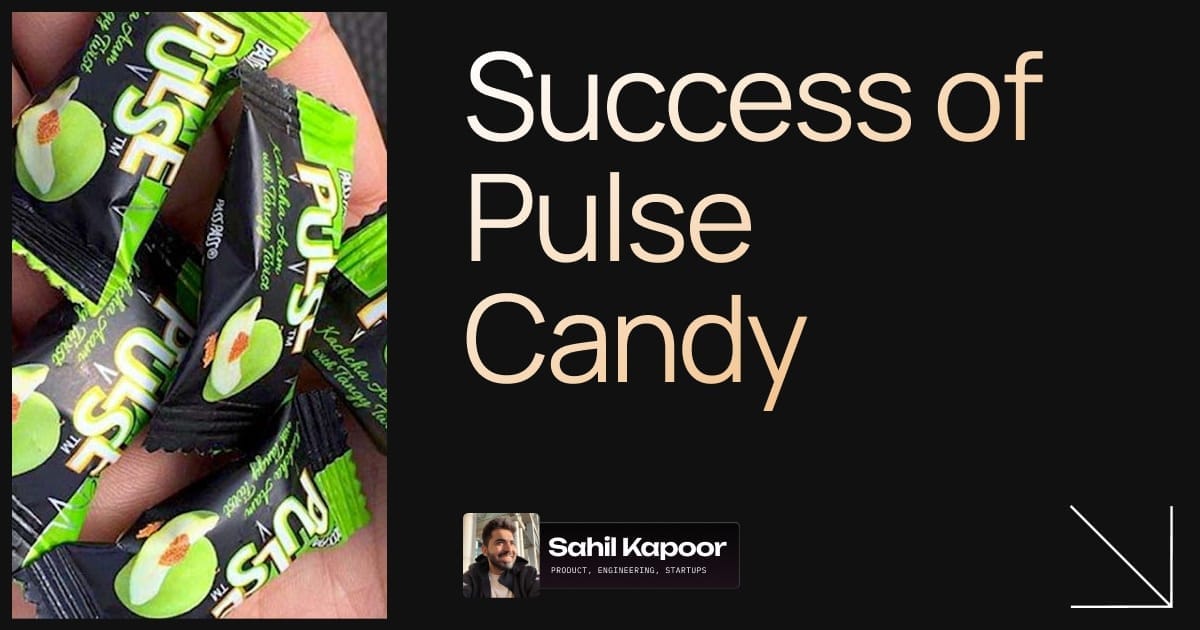
No celebrities. No TVCs. No massive ad spend.
Just a tangy little candy that hijacked taste buds and disrupted a ₹6,000 crore market.
This is the story of Pulse Candy, the DS Group brainchild that turned a humble desi treat into a case study on product market fit.
The numbers are staggering:
- 0 to ₹100 Crore in 8 months (equaling Coke Zero's record)
- 0 to ₹300 Crore in 2 years
- Current Sales crossed ₹750 Crore in FY25
How does a candy priced at ₹1 become one of India's most iconic FMCG stories? It wasn't luck. It was a masterclass in first principles thinking.
Let's break down the playbook.
1. Spotting the White Space
Before Pulse, the candy aisle was a monotony of Western flavors like chocolate bars, caramel, and sugary gums. Legacy brands were busy pushing global tastes to an Indian market that secretly craved something else.
The unspoken demand was for Churan, Aam Papad, and Imli Goli. These are the flavors our childhoods were built on.
DS Group saw what the giants missed: A modern delivery system for nostalgic, native flavors.
2. Product Innovation Over Marketing Stunts
Pulse wasn't just candy. It was a sensory surprise.
Layer 1 was the tangy sweetness of raw mango or Kacha Aam.
Layer 2 was a hidden core of spicy masala.
That masala burst wasn't just a flavor. It was a feature. It created a kinetic reaction, a physical surprise midway through the bite.
The lesson here is simple. They didn't just sell a flavor. They sold an experience. When the product is this good, the market does the marketing for you.
3. The Scarcity Flywheel
No Salman Khan. No IPL spots.
DS Group let the product speak, and India listened.
In 2016, Pulse wasn't just popular. It was scarce. Demand outstripped supply so badly that vendors stopped selling full boxes. They sold pieces individually because stocks would vanish before the next shipment arrived.
I saw this firsthand.
Back when I was at ixigo, the craze was real. You couldn't just walk to the shop and count on finding it. The shortage was so acute that we actually bought an entire box multiple times to keep in the office just to secure our supply.
Scarcity became a feature, not a bug. It triggered a FOMO loop. We didn't just eat Pulse. We hoarded it.
4. Distribution Wins Wars
We love to talk about virality, but in FMCG, distribution is the only metric that matters.
If you were a kid in 2016, your local kirana had a Pulse jar by the counter. DS Group leveraged their existing network to place Pulse in 3.5 million outlets almost overnight. From rural paan shops to urban supermarkets, they were everywhere.
They understood the core truth of the category. At ₹1, candy is an impulse buy. If you aren't visible, you don't exist.
5. Beating the Incumbents
Legacy players tried to copy the flavor, but Pulse had already won the decision free battle.
The ₹1 price point wasn't just cheap. It was frictionless. Consumers didn't think twice. They grabbed it with spare change.
While big brands chased margin percentages, Pulse chased mouths.
The Takeaway for Builders
Pulse proves you don't need deep tech to be disruptive.
Innovation is often just simplicity executed perfectly.
Product Market Fit matters more than ad budget.
Local nuances scale. Do not copy the West. Build for the user in front of you.
Distribution is your moat.
Never underestimate the power of word of mouth. Pulse proved that with flavor alone, a brand can go viral.